How Can I Make Sourdough Bread Gluten Free From Scratch?
You have probably heard the hype about sourdough: the tangy flavor, the crackling crust, and the easier digestion. But if you follow a gluten free lifestyle, you might assume this tradition is off limits. It does not have to be. Learning to bake sourdough bread gluten free is absolutely possible, and it opens up a world of incredible taste and texture that most store bought loaves can only dream of. This guide will walk you through every step, from building a vigorous starter to pulling a perfectly browned loaf from your own oven.
Before you dive in, if you are new to the world of gluten free living, you might want a broader foundation. Our comprehensive resource, The Ultimate Gluten-Free Guide: Foods, Substitutes & Living Well Without Gluten, will help you stock your pantry and understand the basics of gluten free ingredients. With that background and this focused guide, you will soon be on your way to baking with confidence.
I have spent years tinkering with gluten free flours and wild fermentation. Trust me when I say that the first time you slice into a homemade gluten free sourdough loaf and see those irregular holes, you will feel a rush of pride. The process requires some patience, but the payoff is enormous. Let’s get started.
What Is Gluten Free Sourdough Starter and Why Does It Work?
At its heart, a sourdough starter is a living culture of wild yeast and beneficial bacteria. You create it simply by combining flour and water and then letting nature do its work. In a wheat based starter, the gluten network traps gases and provides structure. In a gluten free starter, that network is absent, so we rely on a different set of principles. Yet the fermentation still produces carbon dioxide, lactic acid, and acetic acid, all of which contribute to rise and that signature sour flavor.
“A gluten-free starter behaves much like a wheat starter, but it’s more forgiving; even if you miss a feeding, it will bounce back.”
Baking experts at King Arthur Baking Company
This resilience makes gluten free sourdough an ideal project for beginners. You do not need to worry about over mixing or about developing a perfect windowpane. Instead, you focus on maintaining a healthy colony of microorganisms that will lift and flavor your dough.
The Science Behind Gluten Free Sourdough Fermentation
When you mix flour with water, naturally occurring enzymes begin breaking down starches into simple sugars. Wild yeast then feeds on those sugars, producing carbon dioxide and ethanol. Simultaneously, lactic acid bacteria generate acids that strengthen the dough structure in the absence of gluten. This acidification is what makes gluten free sourdough bread less crumbly and more digestible. According to research published in the Food Microbiology journal, prolonged fermentation can significantly reduce phytic acid, improving mineral absorption, and even partially degrade proteins that can cause digestive discomfort for some individuals.
For those with celiac disease or gluten sensitivity, the key is using certified gluten free whole grains. Brown rice flour, sorghum, teff, and buckwheat all contribute unique flavors and nutrients while staying safe. When you combine this steady fermentation with the right blend of flours, you get a loaf that is tangy, chewy, and nutritious.
Key Differences Between Wheat and Gluten Free Starters
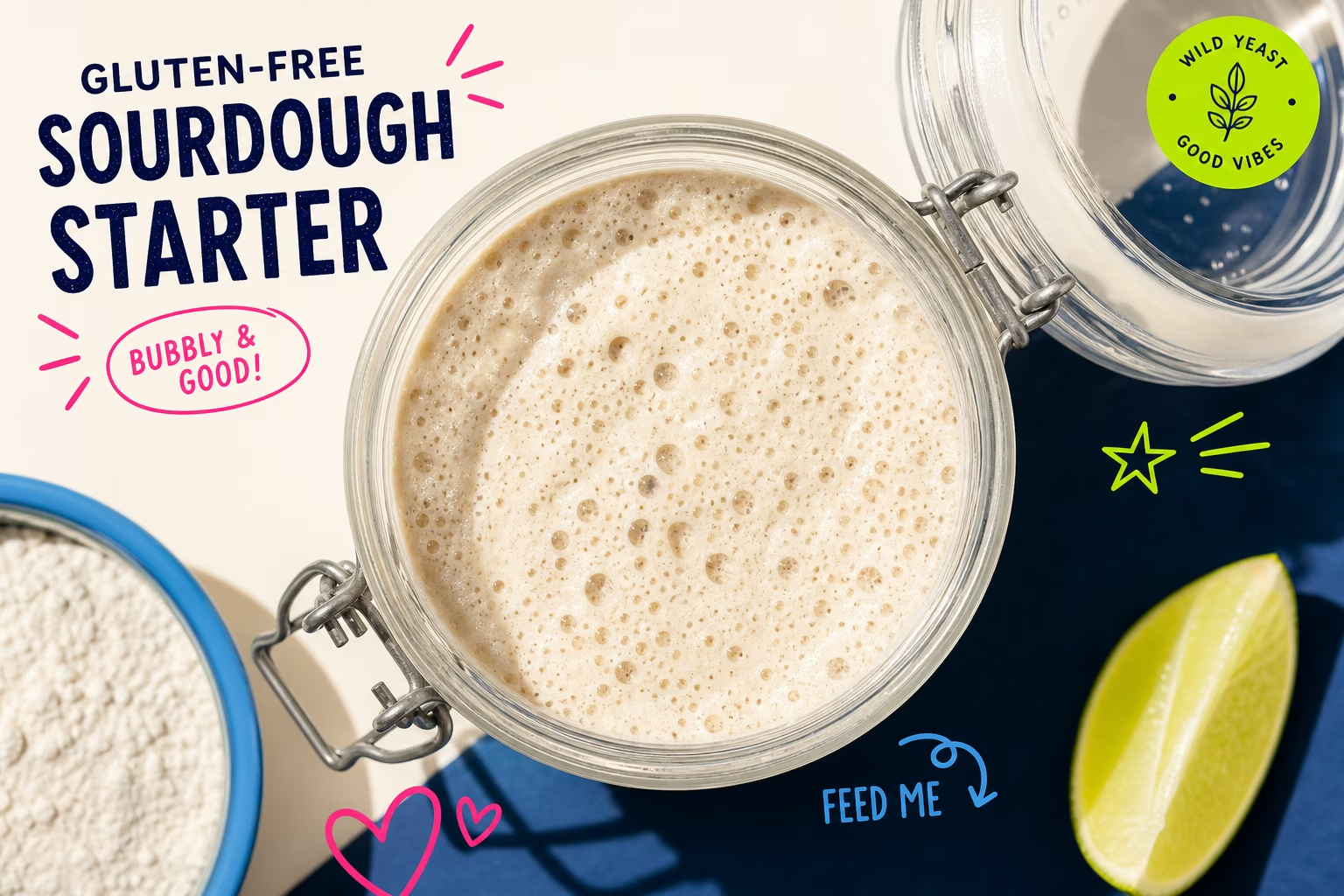
You might notice that a gluten free starter looks a little different from the wheat version. It tends to be more liquid, similar to a thick pancake batter rather than a doughy mass. Its bubbles are often smaller and more uniform. The aroma will shift from a mild flour scent to something fruity, yogurt like, and slightly sour. Unlike wheat starters, gluten free starters do not form a stretchy gluten web, so you judge their activity by the sheer volume increase rather than the ability to stretch. A healthy starter will double or triple in size within 4 to 8 hours after feeding, depending on the temperature of your kitchen.
Another difference is hydration. Most gluten free starters thrive at 100% hydration, meaning equal weights of flour and water. This thin consistency encourages yeast and bacteria to move freely. You will soon learn to read your starter’s personality by its smell, bubble pattern, and the way it sloshes when you tilt the jar.
How Do You Create a Gluten Free Sourdough Starter From Scratch?
Now that you understand the “why,” let’s get into the “how.” You need only two ingredients: a good quality gluten free whole grain flour and filtered water. I recommend starting with brown rice flour or a blend of brown rice and sorghum. These flours provide a reliable fermentable sugar source and set the stage for a robust culture. Stay away from anything that contains gums or starches early on, as they can confuse the fermentation process. For a deeper look at flour options and substitutes that support gut health, our The Ultimate Gluten-Free Guide: Foods, Substitutes & Living Well Without Gluten covers every pantry staple you might need.
Choosing the Right Gluten Free Flours for Your Starter
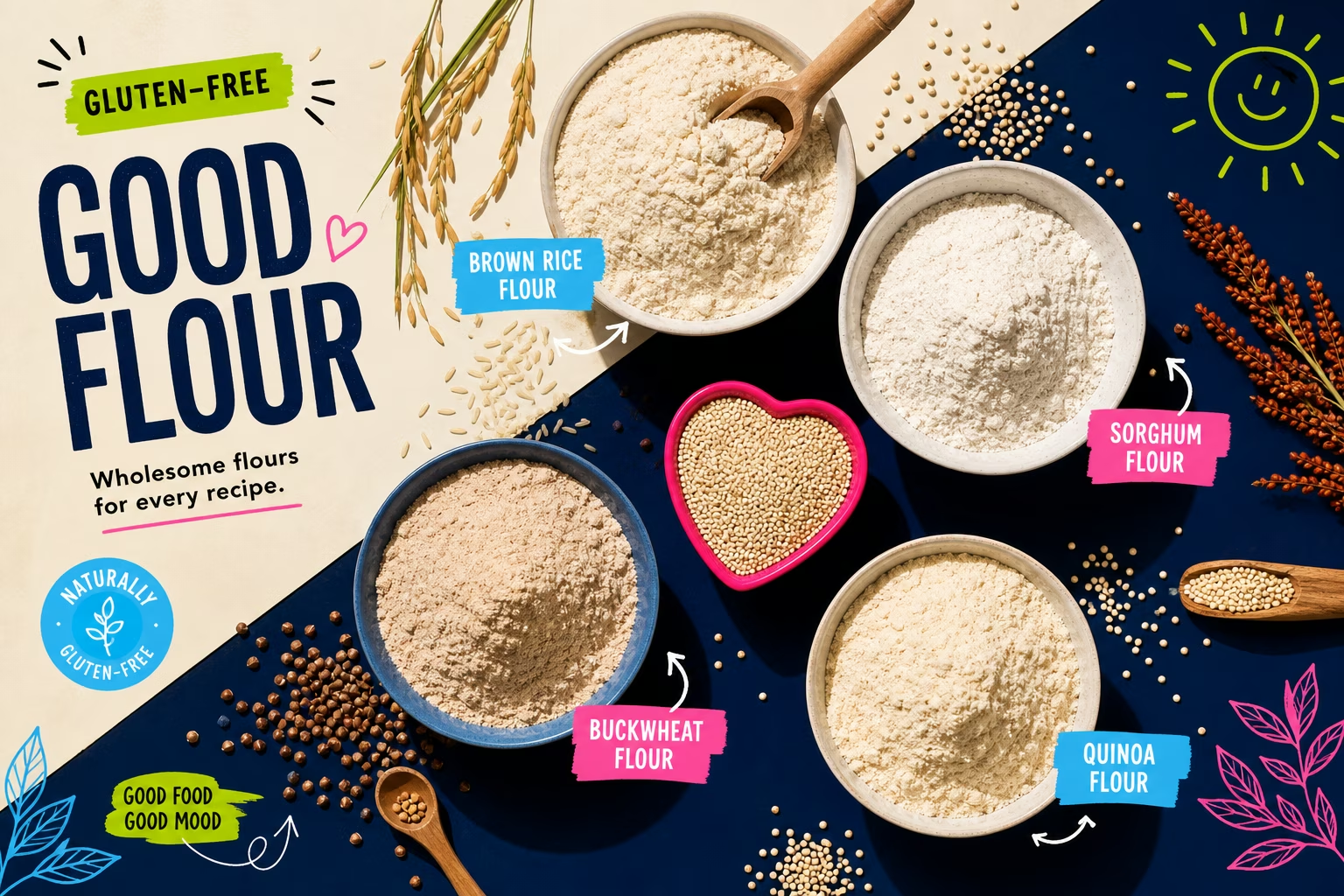
Not all gluten free flours behave the same way in a starter. Whole grain flours contain more wild yeast and nutrients than starches like tapioca or potato starch. Brown rice flour is the most common choice because it is mild, widely available, and produces a steady rise. Teff and buckwheat create a distinct earthy flavor, while sorghum adds a touch of sweetness. I have had great success with a 50/50 mix of brown rice flour and sorghum flour. Avoid using almond flour or coconut flour for the starter, as their high fat and fiber content can hinder yeast activity and lead to off flavors.
“The right flour blend is crucial; we recommend a combination of whole grain and starchy flours to mimic the structure of wheat, with a high proportion of starches for lightness.”
Editors at America’s Test Kitchen
Step by Step Feeding Schedule for a Thriving Starter
To build your starter, begin with 50 grams of brown rice flour and 50 grams of filtered water in a clean glass jar. Stir vigorously, scrape down the sides, and cover loosely with a lid or a coffee filter secured with a rubber band. Place the jar in a spot that stays around 70°F to 75°F. Every 24 hours, discard half of the mixture (about 50 grams) and feed it again with 50 grams of fresh flour and 50 grams of water. By day 3 or 4, you should see bubbles and a slight tangy smell. By day 7 to 10, it should reliably double within 4 to 6 hours of feeding. Once it passes this float test (a spoonful dropped in water floats), it is ready to leaven bread.
Consistency is everything. Missing a feeding by a few hours is not catastrophic, but try to feed at roughly the same time each day. If your kitchen is cold, wrap the jar in a towel or place it in the oven with just the light on. Once the starter is mature, you can store it in the refrigerator and feed it once a week. When you are ready to bake, take it out, feed it twice at room temperature, and use it at its peak.
What Is the Best Gluten Free Sourdough Bread Recipe for Beginners?
Your starter is bubbling and ready to go. Now you can transform it into a beautiful loaf. A simple beginner recipe includes your active starter, a well balanced gluten free flour blend, water, salt, and a touch of oil or honey for softness. The exact measurements will depend on the hydration of your flour blend, but a good starting point is 1 cup of active starter, 2 ½ cups of flour blend, 1 cup of water, 1 ½ teaspoons of salt, and 1 tablespoon of olive oil. This produces a soft, slightly sticky dough that you will shape by hand or with a bench scraper.
Mixing and Hydration: How to Get the Perfect Dough
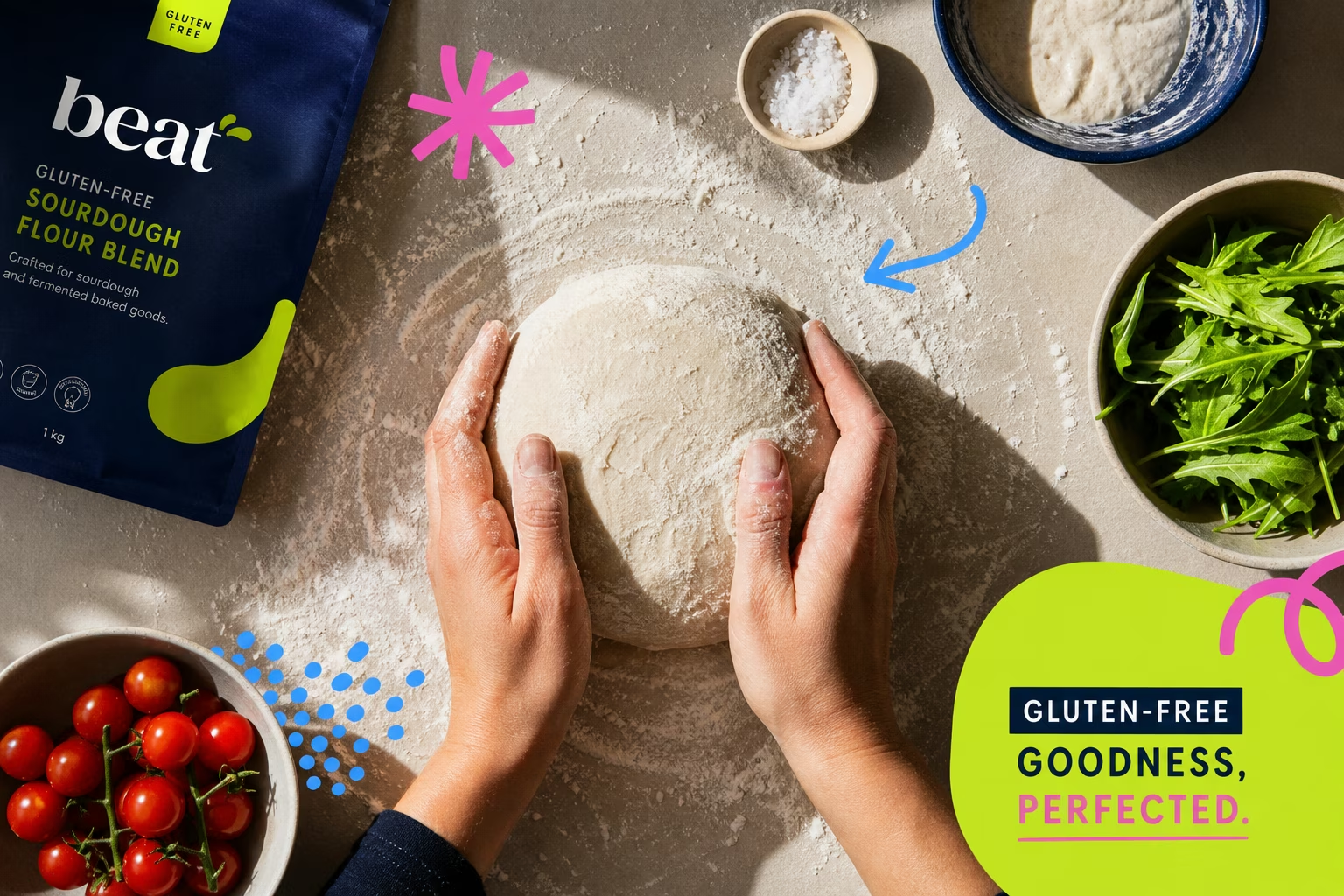
Gluten free sourdough dough is nothing like the firm, kneadable wheat dough. It is more of a thick batter that you stir together in a bowl. Start by combining the starter and water, then add the flour blend and salt. Mix thoroughly until no dry spots remain. The dough will be sticky and shaggy. That is exactly what you want. Let it rest for 30 minutes to fully hydrate the flours. Then perform a series of stretch and folds by wetting your hand, sliding it under the dough, and pulling a section up and over the center. Repeat this four to five times, then cover the bowl and let it rest. Perform three to four sets of stretch and folds over the next 2 hours. This process aligns the starch structures and traps gas, giving your bread a better rise.
“After mastering a few simple techniques, you’ll find that gluten-free sourdough is more forgiving than you think, producing a loaf with a crisp crust and soft, airy crumb.”
Mary Meyer, author of Gluten-Free Sourdough Baking
Shaping and Proofing Your Gluten Free Loaf Without Deflating
After the final stretch and fold, turn the dough out onto a surface lightly dusted with gluten free flour. Use a bench scraper to gently shape it into a round boule. Because there is no gluten network to tighten, you need to work quickly and with a light touch. Place the shaped dough seam side up in a well floured banneton basket or a bowl lined with a floured tea towel. Cover and let it proof at room temperature for 1 to 3 hours, or until it has visibly puffed and a gentle poke springs back slowly. If your kitchen is warm, this can happen quickly, so keep an eye on it. You can also cold proof the dough overnight in the refrigerator, which develops a deeper sour flavor and makes the dough easier to score.
How Do You Bake Sourdough Bread Gluten Free to Perfection?
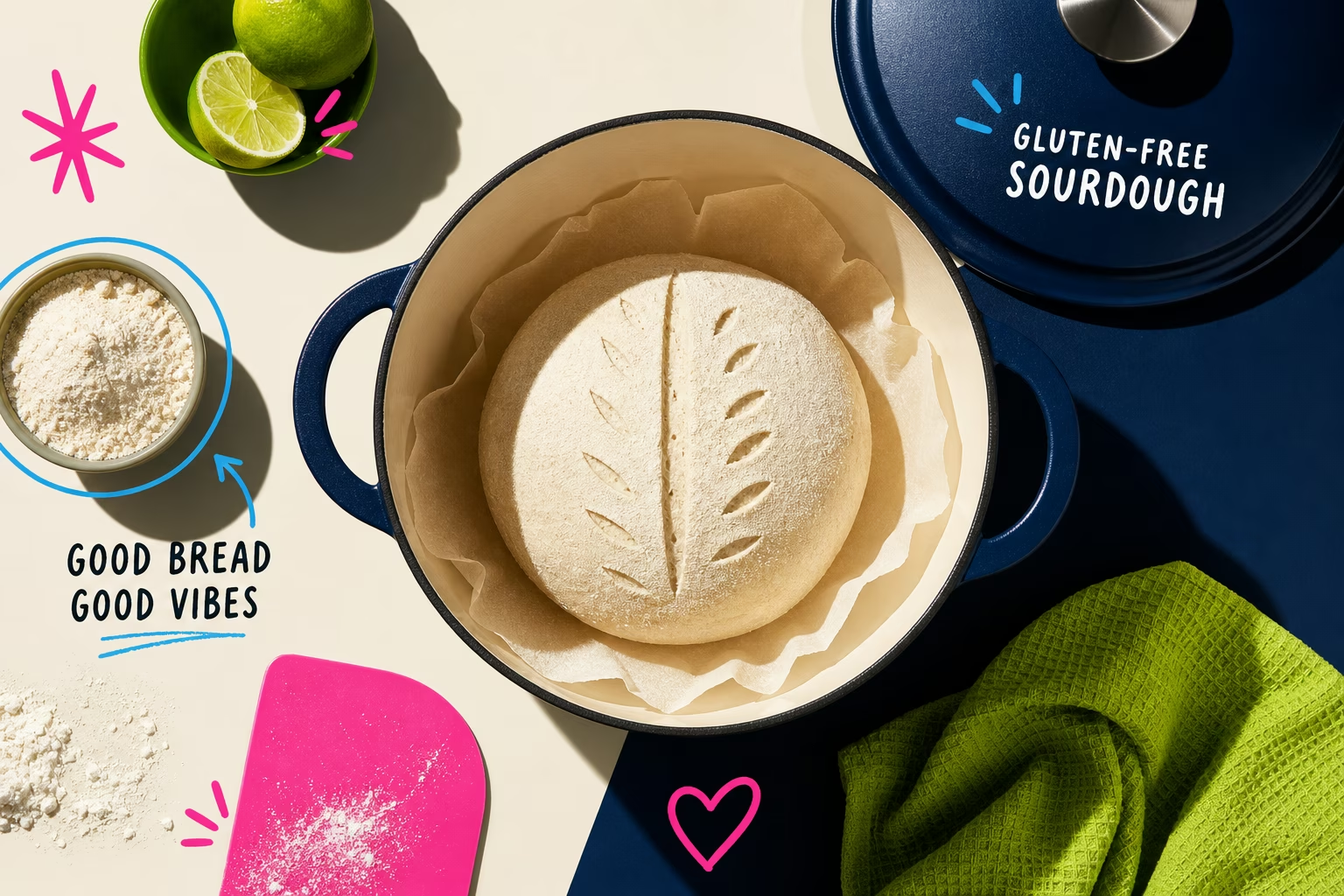
Baking is where all your patience pays off. Preheat your oven to 475°F with a Dutch oven inside for at least 30 minutes. The heavy pot traps steam, which is essential for a crispy crust when there is no gluten to hold onto moisture. Once the oven is screaming hot, carefully remove the Dutch oven, uncover your dough, and flip it onto a piece of parchment paper. Slash the top with a sharp razor blade or lame, then lower it into the pot, cover, and bake for 30 minutes.
Oven Temperature and Steam: The Secret to a Crispy Crust
After 30 minutes, remove the lid and continue baking for another 15 to 25 minutes, until the crust is deeply golden and the internal temperature reaches 210°F. Steam during the covered phase gelatinizes the starches on the surface, which then set into a glossy, crackly crust during the uncovered phase. If you do not own a Dutch oven, you can still create steam by placing a tray of ice cubes on the bottom rack. The key is to keep the humidity high for the first half of baking.
Cooling and Storing Your Gluten Free Sourdough Loaf
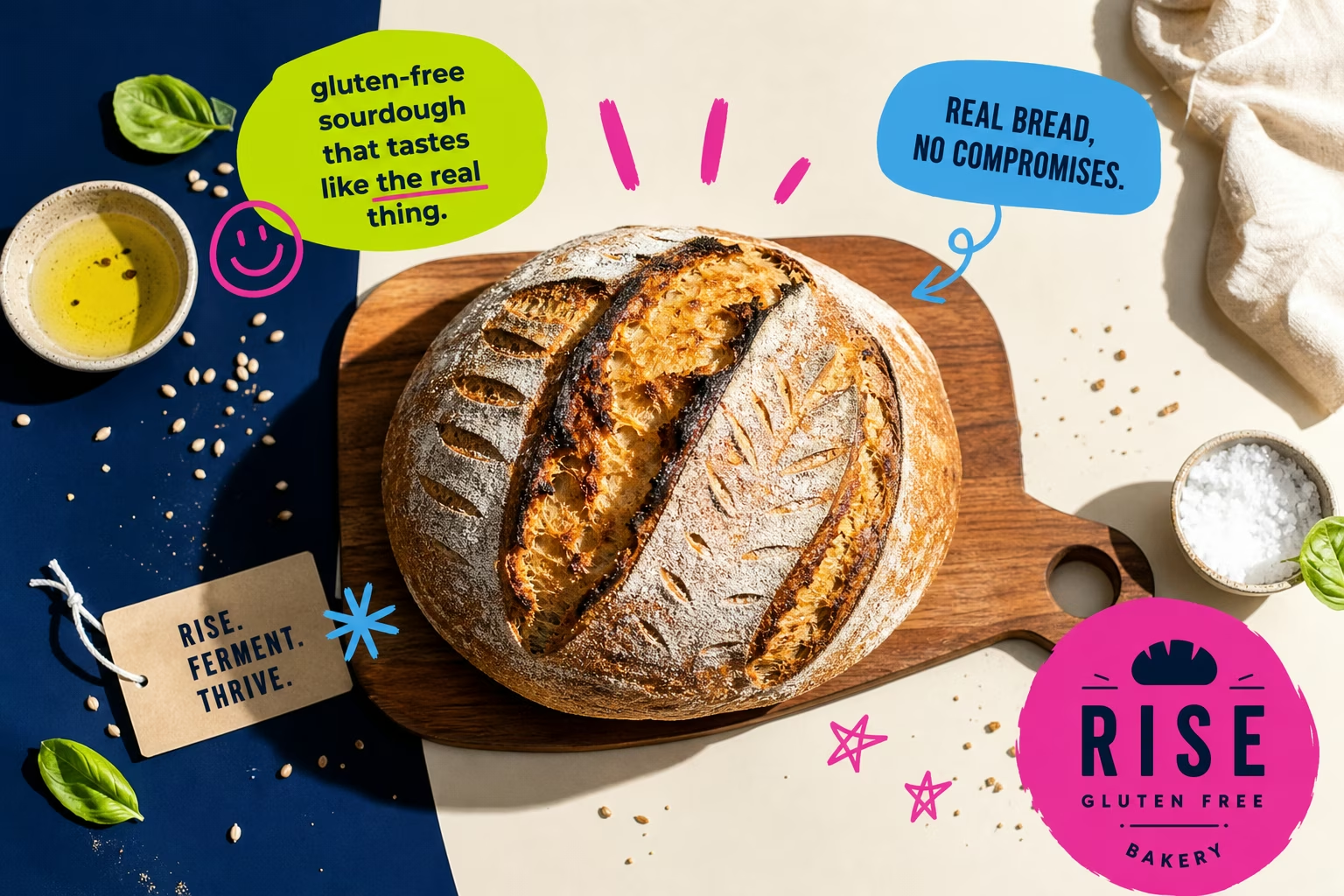
This step is the hardest: let the loaf cool completely on a wire rack before slicing. Cutting into it too soon will compress the crumb and leave you with a gummy texture. Gluten free sourdough bread continues to set as it cools. Once cooled, store it cut side down on a wooden board for a day, or wrap it tightly and freeze for longer storage. To revive day old bread, simply toast it or warm it in the oven for a few minutes.
What Can I Do With Gluten Free Sourdough Discard?
Every time you feed your starter, you will remove a portion to keep the culture manageable. That leftover portion is called discard, and it is liquid gold. Instead of pouring it down the drain, use it to add tangy flavor and tenderness to a whole range of baked goods. You can find endless gluten free sourdough discard recipes that turn what might be waste into crackers, pancakes, muffins, and even chocolate cake. Before you know it, you will be maintaining your starter just to have more discard to play with.
The discard is not as strong a leavener as active starter, so you usually pair it with baking powder or baking soda. But it shines in flavored quick breads, flatbreads, and crispy snacks. For more gluten free meal inspiration that makes the most of every ingredient, our guide The Ultimate Gluten-Free Guide: Foods, Substitutes & Living Well Without Gluten can help you round out your weekly menu.
Simple Gluten Free Sourdough Discard Recipes That Save Waste
One of my favorite ways to use discard is in morning pancakes. Mix 1 cup of discard with 1 egg, 2 tablespoons of melted butter or oil, a pinch of salt, and a tablespoon of sugar. Cook them on a hot griddle and you get tangy, fluffy pancakes in minutes. You can also stir discard into a simple batter for crepes, waffles, or even crackers. Just spread a thin layer on a baking sheet, sprinkle with salt and seeds, and bake until crisp. These crackers have a subtle sourdough twang that pairs perfectly with cheese or hummus.
Creative Ways to Use Discard Beyond Bread
Discard is a star ingredient in gluten free sourdough discard recipes that go far beyond breakfast. Stir it into cornbread batter for a moist, flavorful twist on a classic. You can even use it as a base for savory fritters or to add depth to sauces and soups.
What is a gluten-free sourdough starter?
A gluten-free sourdough starter is a mix of gluten-free flour and water that captures wild yeast and bacteria to leaven bread naturally.
How long does it take to make a gluten-free sourdough starter?
It typically takes 7 to 10 days to cultivate a gluten-free sourdough starter that is ready for baking.
Can I substitute any gluten-free flour in sourdough recipes?
Not all gluten-free flours are suitable. Whole grain flours like brown rice and sorghum work best for starters and bread.
Why is my gluten-free sourdough bread dense?
Density can result from insufficient proofing time, inactive starter, or incorrect hydration levels in the dough.
How do I store leftover gluten-free sourdough bread?
Store it cut side down on a wooden board for a day or wrap it tightly and freeze for longer storage.
What can I do with sourdough discard?
Use it in recipes for pancakes, crackers, muffins, and more to add a tangy flavor and reduce waste.
Is gluten-free sourdough easier to digest?
Yes, the fermentation process reduces phytic acid and breaks down some proteins, making it easier on the digestive system.